
Gas logs
Vented or vent-free gas logs: what each one asks of your home
Both kinds of gas log set put a flame in your fireplace, but they send the fumes to opposite places: up the chimney, or into the room. That one difference decides where each can go, what the agencies say about it and who should connect it.
Pleasant Hearth guides · September 26, 2026
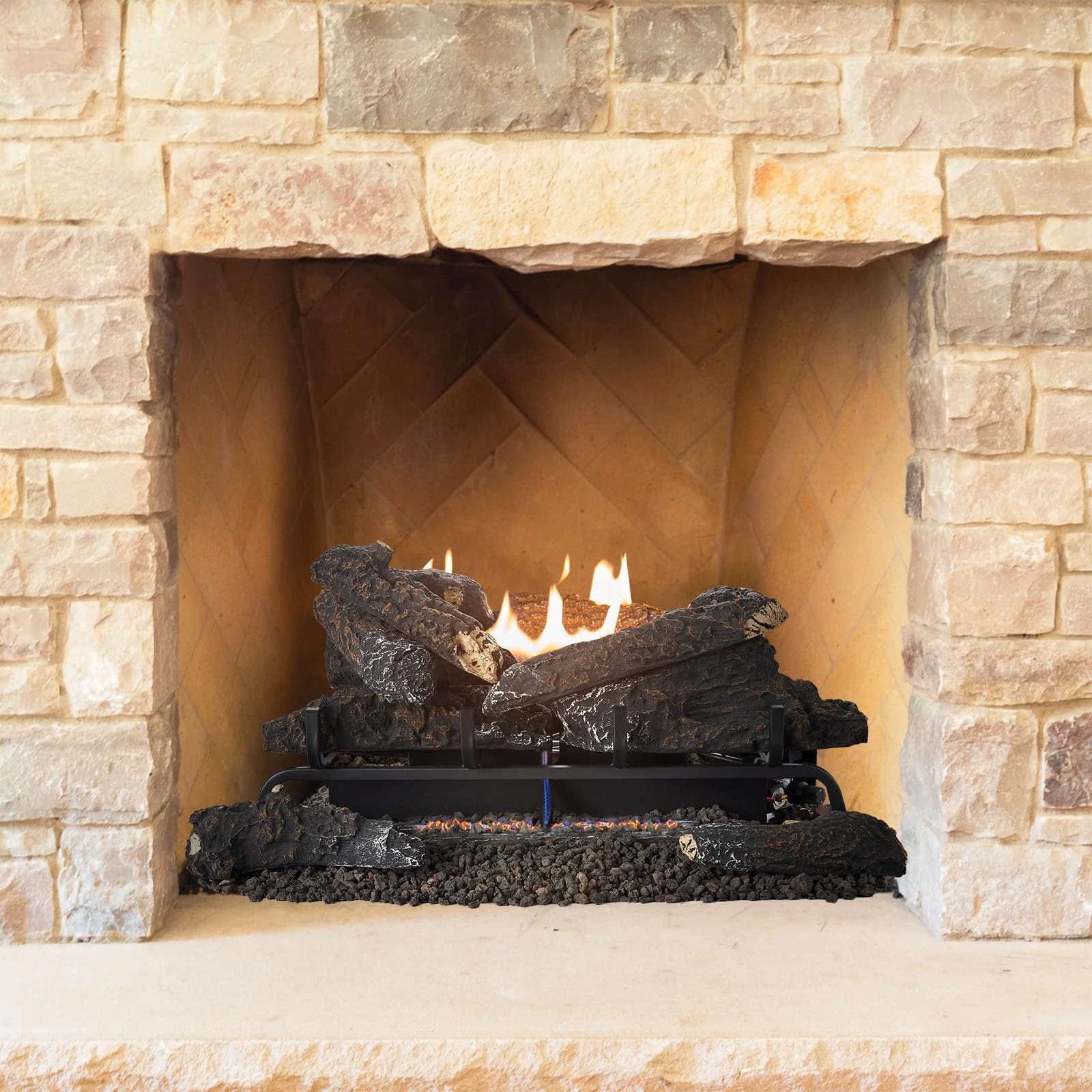
What a vented log set is
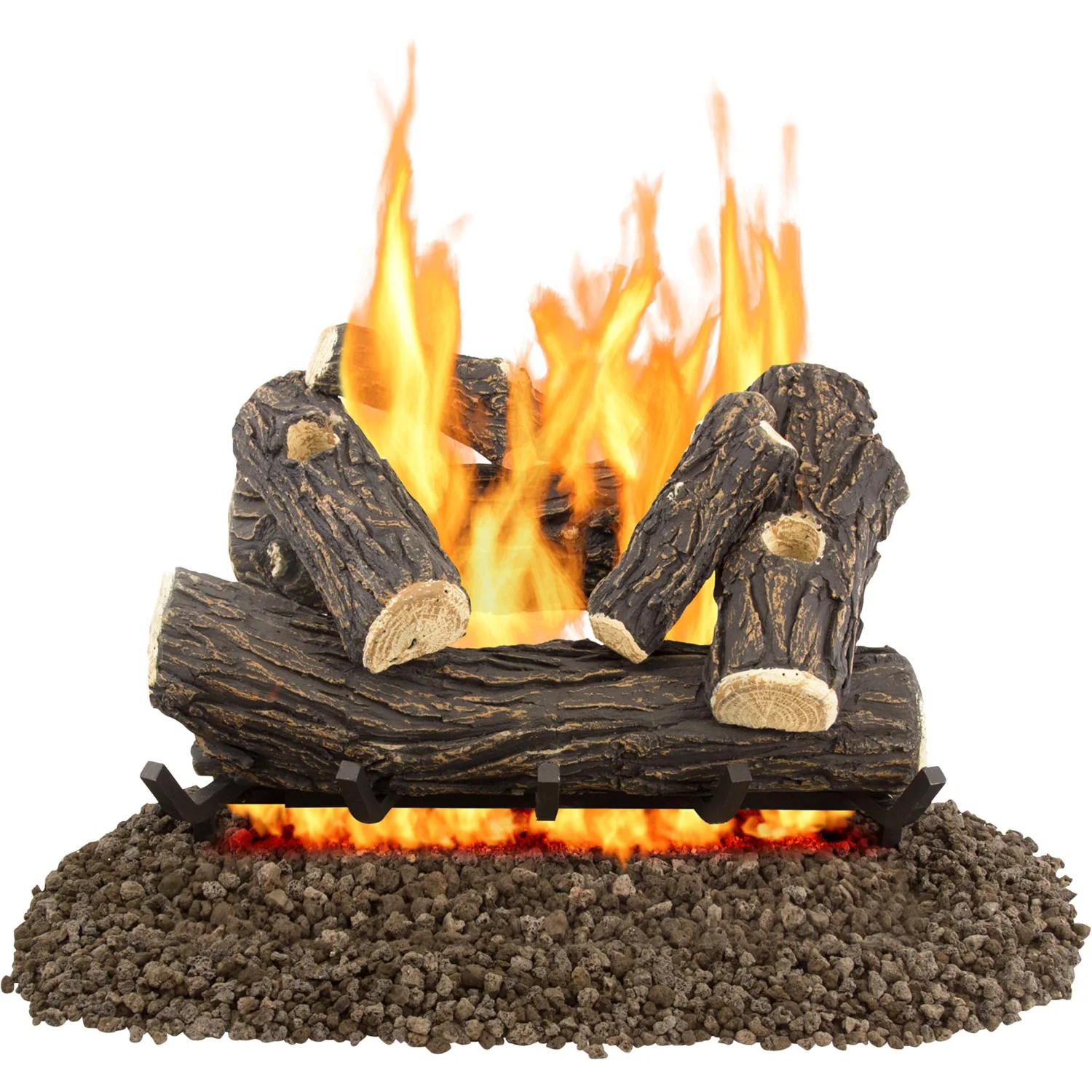
A vented log set burns in a working fireplace with the damper open, and its fumes leave through the chimney the way wood smoke does. Our vented sets are the Arlington Ash in 24 and 30 inches and the Willow Oak in 24 inches. Each lights with a match, runs a dual burner on manual control and needs no electricity.
All three run on natural gas as they come. The Arlington Ash carries seven hand-painted concrete logs and the Willow Oak six. Every set arrives with a starter kit of vermiculite, glowing ember fibers and lava rock. The 24-inch sets are rated at 55,000 BTU per hour, the 30-inch Arlington Ash at 65,000.
A vented set suits a home that already has a wood-burning fireplace with a working chimney, where you want the flame without splitting and stacking wood. Nothing else about the room changes: the same opening, the same damper and the same chimney carry the fumes away.
EPA gives two plain rules for a gas fireplace: keep the flue open whenever it is in use, and have flues and chimneys inspected every year. On its Burn Wise pages, EPA adds that decorative gas logs are not designed to be a significant source of heat. So a vented set is mostly about the look of a fire, one you start with a match instead of kindling.
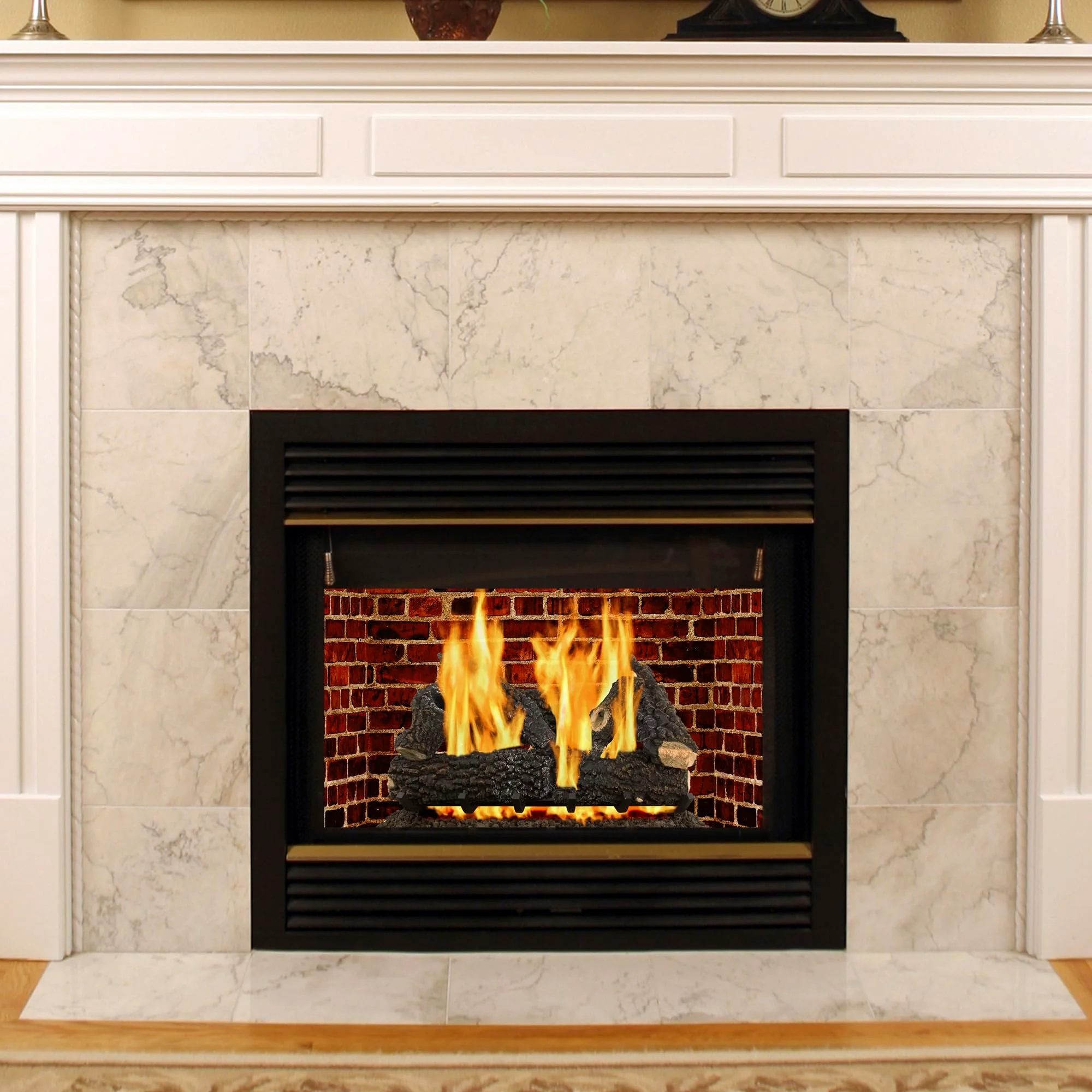
What vent-free means
Vent-free logs, stoves and fireplace systems need no chimney or flue. That is the whole design, and it has a direct result: whatever the flame gives off stays in the room with you.
EPA lists unvented gas space heaters among the indoor sources of carbon monoxide, nitrogen dioxide and particles. CDC says carbon monoxide is in the fumes whenever fuel burns in stoves and fireplaces, and that it can build up indoors. Propane and natural gas both appear on the CPSC list of fuels that produce it when they burn incompletely.
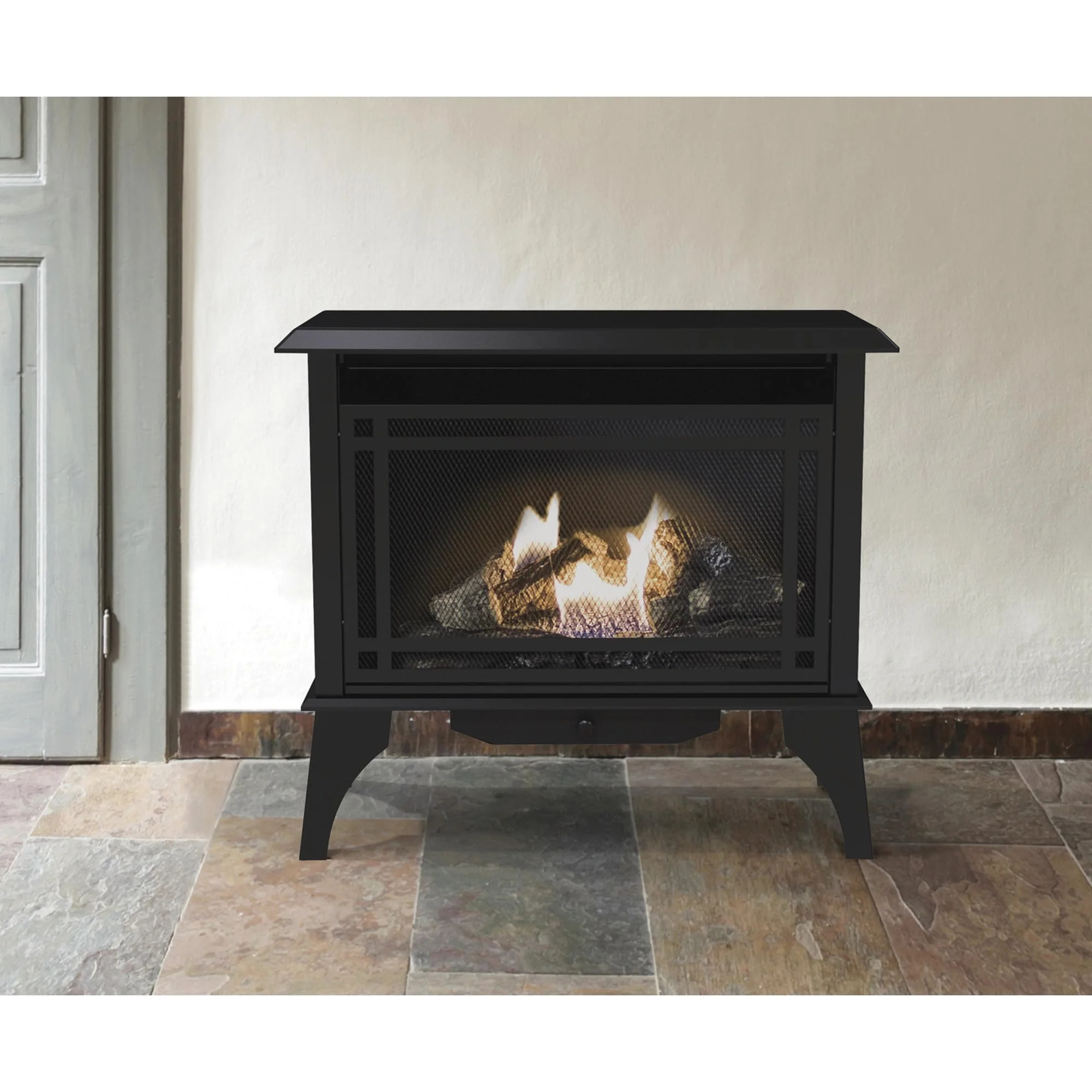
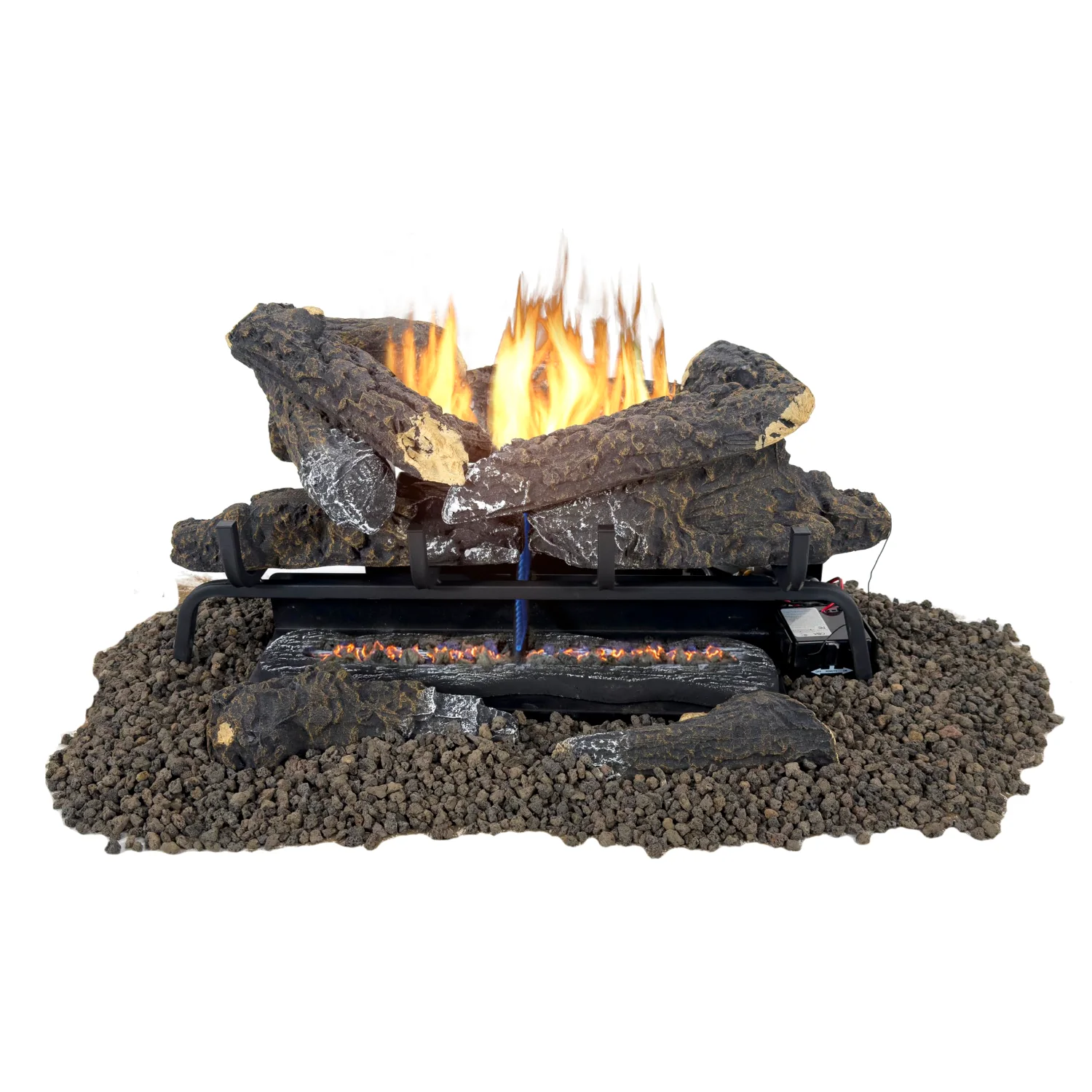
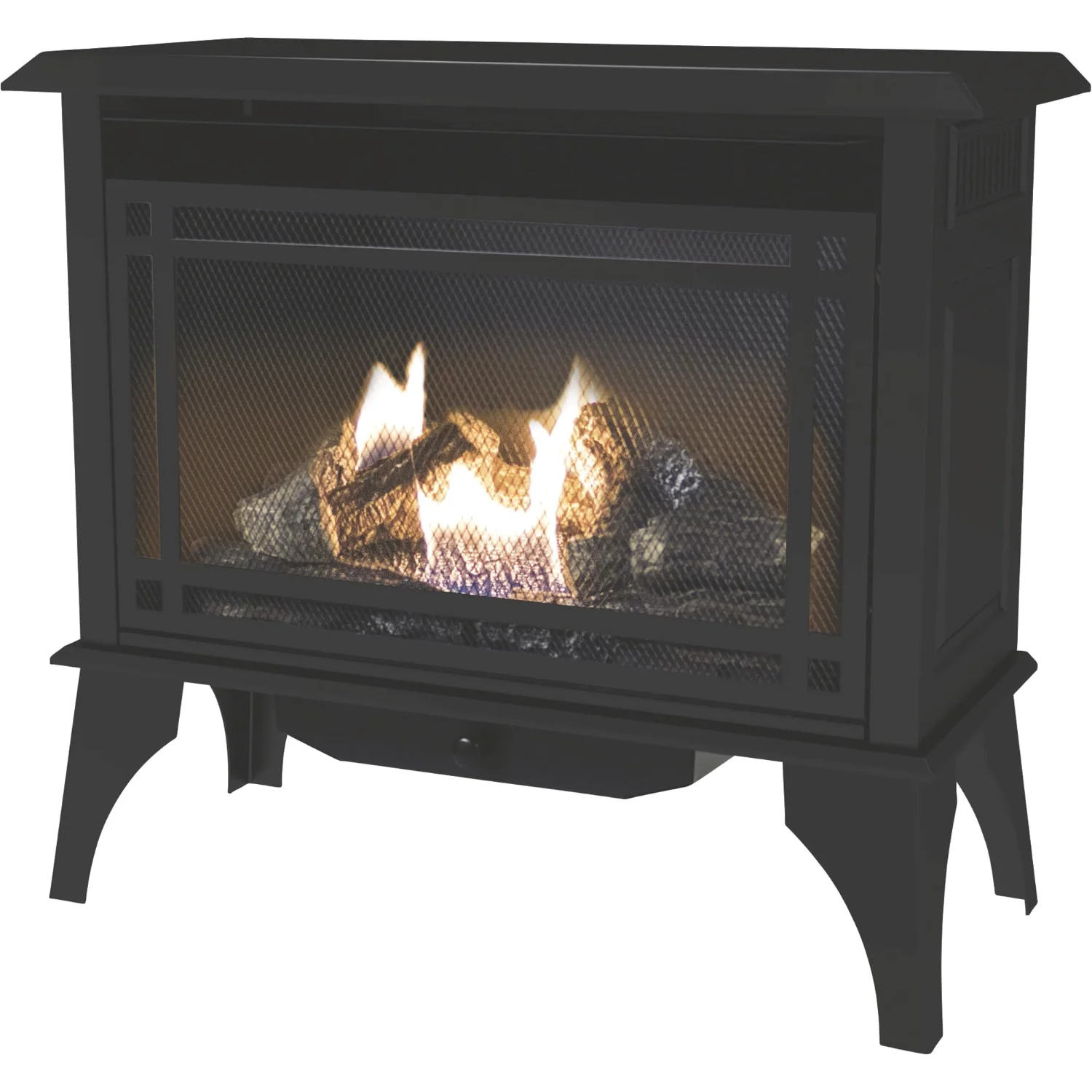
Our vent-free range covers three log sets, two stoves, two fireplace systems and fireboxes made to hold a vent-free log set. The Southern Oak comes in 18 inches, the Wildwood and Valley Oak in 24, and all three are dual fuel, running on natural gas or propane. Our two stoves carry their ratings in their names, 30,000 and 20,000 BTU per hour, and the Pewter Oak and Platinum Oak systems run at 26,000 each.
Most of them hold a temperature on their own. The stoves and systems keep a set heat level with a thermostat knob. On the Valley Oak, a 2-in-1 millivolt remote works as an on and off switch or a programmable thermostat. Its third burner, a pan of ember fiber next to the dual burner, gives the glow of a bed of embers.
Our 42-inch radiant firebox gives a vent-free log set a place to sit in a zero-clearance design. Its flush face takes a finish of stone, brick, tile or slate, and it arrives with a draw screen and a hood.
What the agencies say about unvented appliances
The Pleasant Hearth catalog includes vent-free logs, stoves and fireplace systems. Federal agencies and NFPA advise against unvented fuel-burning appliances in the home, each in its own words, and you deserve to hear that from us before you buy one.
- EPA, Burn Wise. On these pages, now kept online as an archive, EPA says it does not support gas stoves or gas logs that need no outside venting, because of indoor air quality concerns. It also notes that some jurisdictions make installing an unvented gas stove illegal.
- EPA, indoor air. For an unvented space heater, EPA advises following the manufacturer's directions and reading a persistent yellow-tipped flame as a sign the unit is out of adjustment. It also advises opening a door to the rest of the house and a window slightly while the heater runs.
- CPSC. Never run an unvented fuel-burning appliance in a room where people sleep.
- NFPA. All fuel-burning equipment should be vented to the outside to avoid carbon monoxide poisoning.
- CDC. Do not cook or burn anything on a stove or fireplace that is not vented.
- California. State law bars selling unvented heaters designed for use inside a home, with exceptions for electric heaters and decorative gas logs used in a vented fireplace. Natural gas unvented decorative logs and fireplaces may be sold there only with approval from the state housing and health departments and under the other conditions of the statute.
Where a vent-free product cannot go
Our vent-free log sets and fireplace systems are marked not for sale in California or Canada. On every vent-free log set, stove and system in our range we print the same instruction: check local regulations on installation restrictions and requirements first.
Start with the rooms. CPSC rules out any room where people sleep, which takes in bedrooms and also a den where a guest spends the night on the sofa. Then call your city or county building department. EPA says whether you need a permit depends on where you live, and that the local department holds the rules.
Some places settle the question for you, and California is one of them. If the answer where you live is no, look at what California itself leaves out of its ban. Decorative gas logs in a vented fireplace are one exception, and electric heaters such as our 28-inch Henley electric fireplace are the other.
Where vent-free is allowed and you choose it, EPA's advice for unvented heaters applies every time it runs. Keep a door open to the rest of the house and a window open slightly, and watch the flame. A yellow tip that will not go away is EPA's sign that the unit is out of adjustment. That calls for the technician who services it.
Carbon monoxide alarms, vented or not
Every gas fire burns fuel, so every home with one needs carbon monoxide alarms, whichever set sits in the firebox. CPSC asks for alarms that meet UL 2034 on every level of the home and outside sleeping areas. For CDC it is battery or battery-backup detectors near every sleeping area, replaced when the manufacturer says or every five years. That goes for a vented set too, since it burns the same natural gas or propane.
Learn the early signs too. CPSC lists headache, fatigue, shortness of breath, nausea and dizziness, and notes that they resemble the flu. If an alarm sounds, go outside to fresh air at once and call 911 or the fire department.
Yearly service belongs on the calendar as well. CPSC asks for a professional inspection of the heating system with its chimneys and flues every year. CDC asks for yearly service of gas appliances by a qualified technician.
Our gas lineup side by side
Our vented sets are rated at 55,000 and 65,000 BTU per hour, the vent-free units between 20,000 and 33,000. Fuel splits the same way. The vented sets run on natural gas and switch to propane only with a conversion kit, while every vent-free unit is dual fuel from the start.
Hold the size in each set's name, 18, 24 or 30 inches, against your own firebox. Measure its width before you choose, and let the installer confirm the fit.
| Product | Type | Size | BTU per hour | Fuel |
|---|---|---|---|---|
| Arlington Ash 24-inch | Vented log set | 24 in. | 55,000 | Natural gas, propane with a conversion kit |
| Willow Oak 24-inch | Vented log set | 24 in. | 55,000 | Natural gas, propane with a conversion kit |
| Arlington Ash 30-inch | Vented log set | 30 in. | 65,000 | Natural gas, propane with a conversion kit |
| Southern Oak 18-inch | Vent-free log set | 18 in. | 30,000 | Natural gas or propane |
| Wildwood 24-inch | Vent-free log set | 24 in. | 30,000 | Natural gas or propane |
| Valley Oak 24-inch | Vent-free log set | 24 in. | 33,000 | Natural gas or propane |
| 30,000 BTU gas stove | Vent-free stove | 32 in. | 30,000 | Natural gas or propane |
| 20,000 BTU compact gas stove | Vent-free stove | 23.5 in. | 20,000 | Natural gas or propane |
| Pewter Oak fireplace system | Vent-free fireplace system | 38 in. | 26,000 | Natural gas or propane |
| Platinum Oak fireplace system | Vent-free fireplace system | 38.5 in. | 26,000 | Natural gas or propane |
Propane conversion kits and ember fiber
Our propane conversion kits belong to the vented sets only. They turn an Arlington Ash or Willow Oak set from natural gas to liquid propane where only propane is available, and they replace match lighting with a pilot. One kit uses manual ignition, the other piezo ignition with a remote. The vent-free sets are dual fuel already and have no use for them.
Propane brings its own requirements. Our vented sets carry a warning against a propane tank of less than 100 lb. The stoves ask for a 100-lb tank or larger with a two-stage adjustable regulator, and the fireplace systems for a 20-lb tank or larger with the same regulator. Leave the tank and the regulator to your installer and your local gas company.
Glowing ember fiber is rock wool that gives a gas fire the look of a glowing bed of ashes. Our vented sets include some in their starter kit, and the Valley Oak burns it in a pan of its own. Add or replace it only as the manual of your log set directs.
Remotes need a home of their own. USFA asks you to keep fireplace switches and remote controls out of children's reach. That covers the remote of a Valley Oak set or a piezo conversion kit as much as a wall switch.
Installation is a job for a qualified professional
NFPA says stationary heating equipment should be installed by a qualified professional, to local codes and the manufacturer's instructions. CPSC says the same about fuel-burning appliances in general, noting that most of them need a qualified professional. For a gas stove, EPA calls for a certified technician to install it and for an inspection every year.
The work is more than setting logs on a grate. A gas line has to reach the firebox, the burner has to match the fuel, and a propane supply needs the right tank and regulator. An installer who works to local codes, as NFPA asks, can also tell you what your building department allows before you buy anything.
CDC adds one more thing to look for: gas equipment that carries the seal of a national testing agency such as Underwriters Laboratories. Ask your installer to show you that seal on any gas appliance you consider.
At the Pleasant Hearth family of products we would rather you light a vented set your building department approves than a vent-free stove it turns down. Compare both kinds on our gas log sets shelf, and look through our vent-free logs, stoves and systems with your building department's answer in hand. Freestanding stoves and fireboxes sit on our stoves and fireboxes shelf.
From the catalog
Pieces from this guide
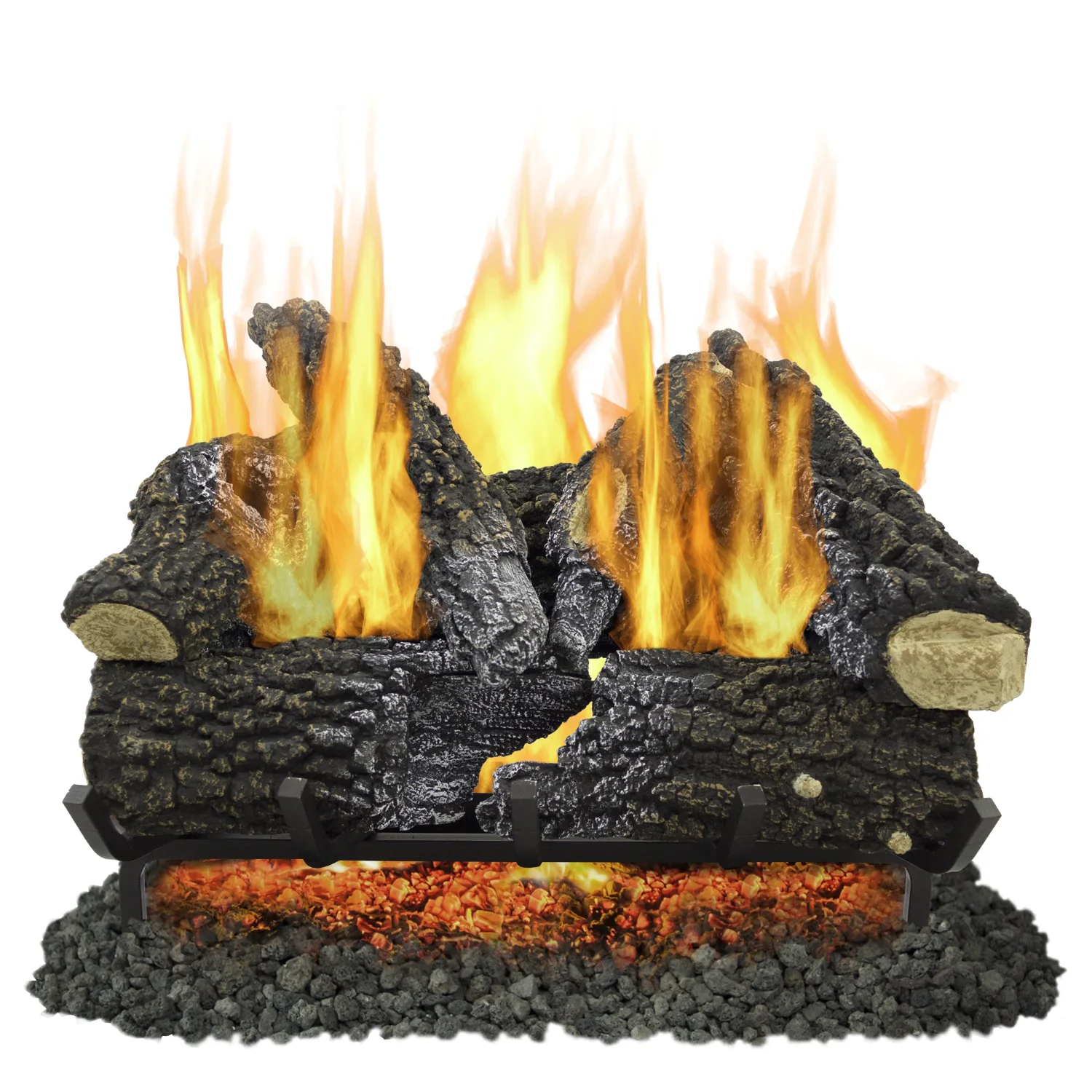

Pleasant Hearth Arlington Ash 24-inch vented gas log set
24 in logs · 55,000 BTU · vented


Pleasant Hearth Willow Oak 24-inch vented gas log set
24 in logs · 55,000 BTU · vented
Pleasant Hearth Valley Oak 24-inch vent-free gas log set
24 in logs · 33,000 BTU · vent-free

Pleasant Hearth 30,000 BTU vent-free gas stove
30,000 BTU · Dual fuel
