
Fire pits
Where to put a fire pit: distance, base and the right fuel
Before you unbox a fire pit, walk the yard with a tape measure. Ten feet of clear space, a level base that will not burn and the right fuel decide where the evening happens.
Pleasant Hearth guides · September 26, 2026
Wood or propane: two kinds of fire pit
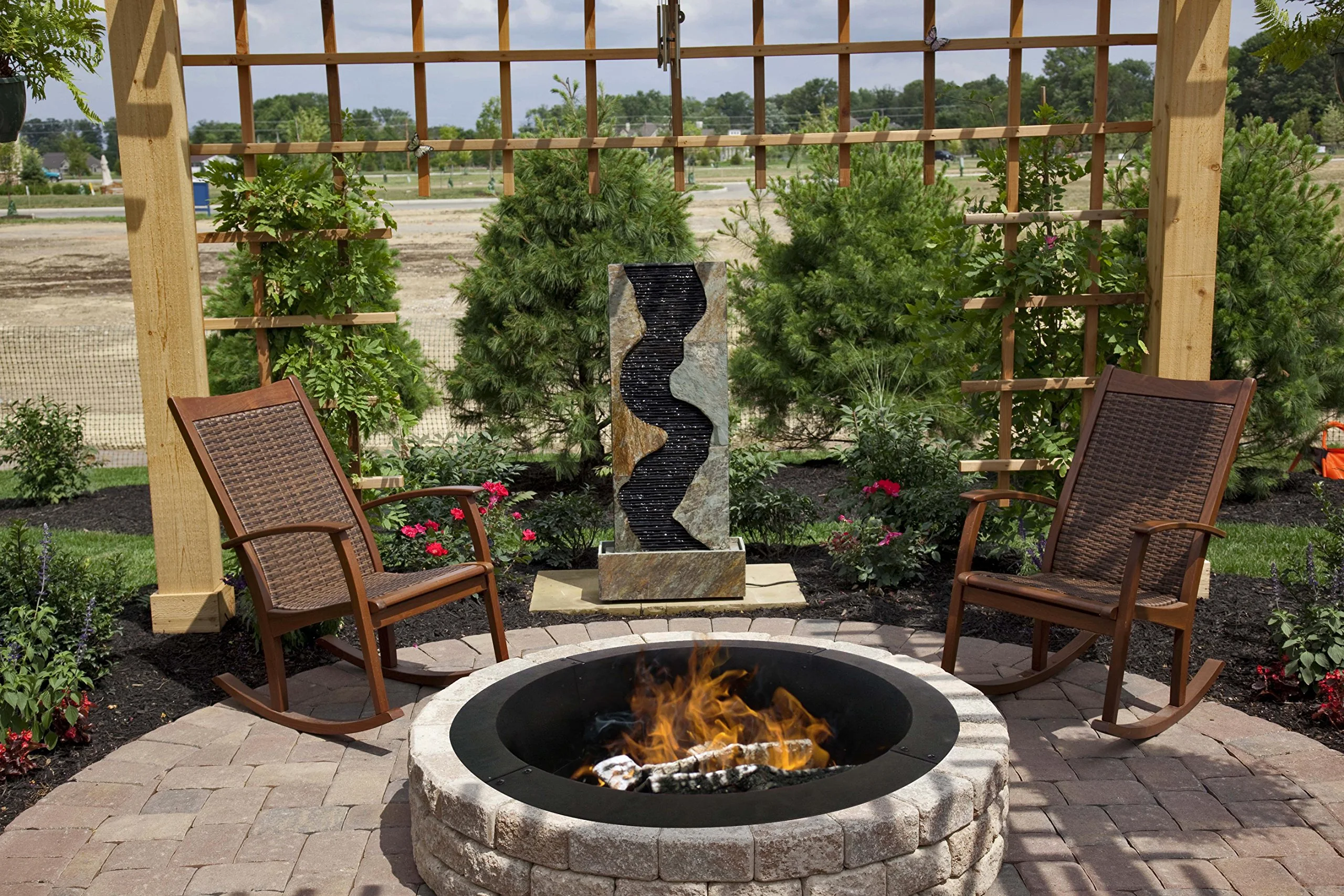
Our fire pits split by fuel. The wood-burning side runs from plain steel rings to bowls with lids and cooking grids. It covers the 28-inch round and 36-inch square fire rings, the Langston, Palmetto, Killian and Charlotte bowls, and the square Hudson. On the propane side stand three fire pit tables, the Halifax, Montreal and Lockwood, each with room in its base for a 20 lb propane tank that you buy separately.
A wood fire gives you crackle, embers and the job of feeding it all evening. With a propane table you light the flame at the turn of a knob with piezo ignition, set its height yourself, and watch blue glass rocks where the logs would be. EPA's Burn Wise pages note that switching to natural gas or propane reduces harmful air pollutants.
Both kinds need the same patch of ground. NFPA's advice on fire pits covers a propane table as much as a steel ring, and the choice between them comes after you have found the spot.
Ten feet from anything that can burn
NFPA sets the first measurement: a fire pit goes outdoors only, at least 10 feet from anything that can burn. Measure from the outer edge of the pit, not its center. House siding, a wood deck, the eaves overhead and any branch hanging over the spot all count, and NFPA names each of them.
A tape and a few garden stakes make the check quick. Stake the spot where the pit will stand, run the tape out 10 feet in every direction from its edge, and look up as well as around. Nothing in that circle should be able to burn, and nothing should hang over it.
Walk the circle and look for what NFPA does not list but that burns all the same: a wooden fence, a garden shed, the stack of firewood you meant to keep handy. Move them or move the pit. Our 36-inch square ring, for example, measures 41.50 inches across its outer edge, so its clear circle is wider than the name suggests.
Your town may have a say as well. NFPA asks you to look up local rules and permits before the first fire, some towns set distances of their own, and EPA notes that some local governments restrict backyard fires altogether.
A level base that will not burn
The pit needs a level surface that will not catch fire, and NFPA names three: patio blocks, brick and concrete. A wood deck sits on its list of places to keep away from. Dry lawn counts as something that can burn.
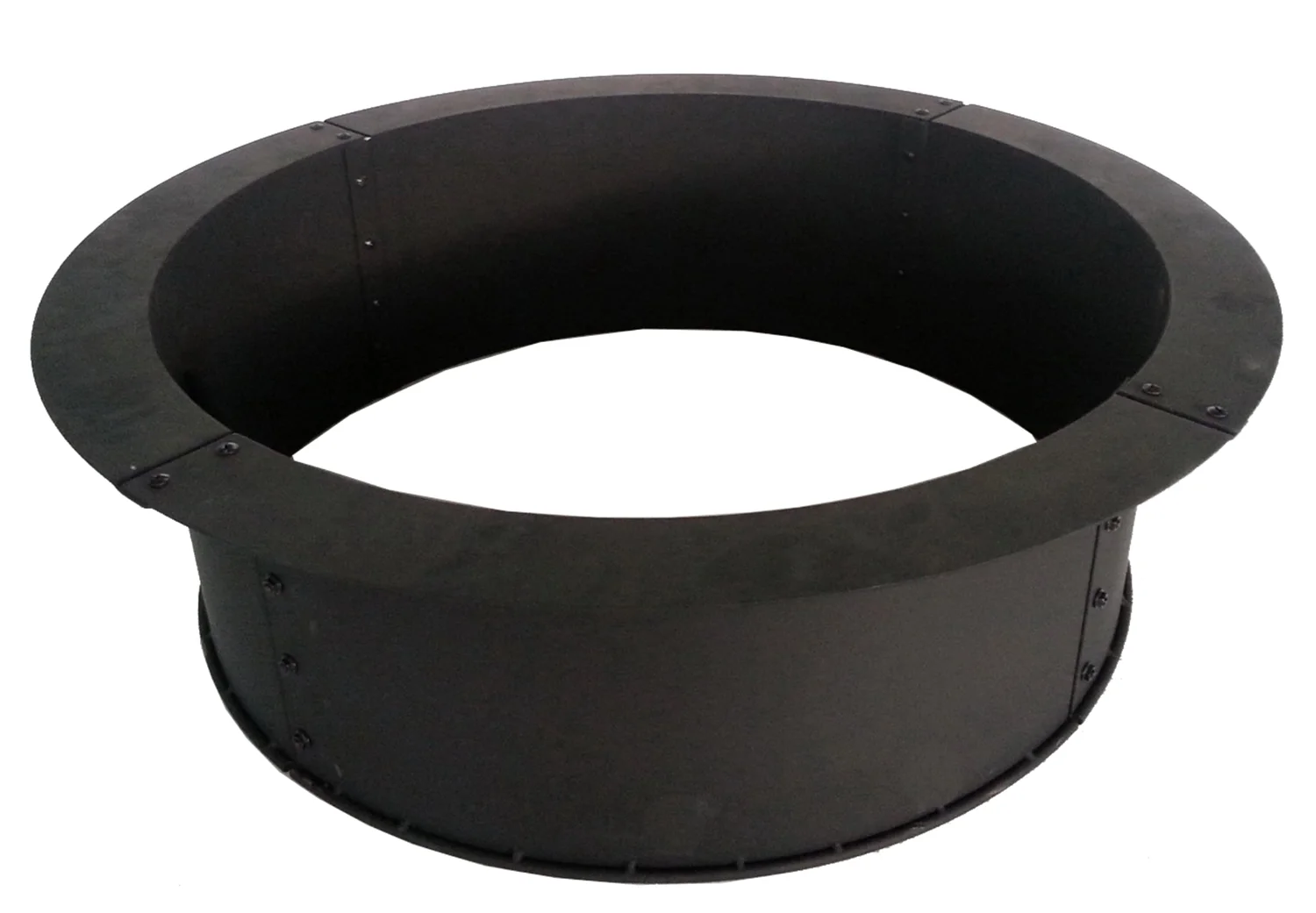
Our steel fire rings suit this step. The 28-inch round ring and the 36-inch square ring, which is 10 inches deep, work on their own or as the insert of a brick surround. You build the surround yourself, with the bricks bought separately. Set either ring on a level pad of patio blocks or brick, and the base and the surround become one job.
Once a ring sits inside a brick surround, the outer face of the bricks becomes the edge you measure from. Lay out the 10 feet after the surround is planned, not before, so the circle grows with the build.
The Hudson and the Lockwood table have adjustable floor levelers for a patio that is slightly uneven. Levelers fine-tune a surface that is already sound. A slope or a soft lawn needs a proper pad first.
Some of our pits double as furniture, which settles where they live. The Charlotte takes a steel table lid that turns it into an accent table, and the Halifax and Montreal take lids that turn them into occasional tables when no fire is burning. Pick the spot for the fire, and the table stays there too.
The Langston has handles on its outer ring for moving it, once it has cooled. A bowl you plan to move around the yard still needs a level patch that will not burn at every place it lands, with the same 10 feet around it.
Spark screens and a three-foot line
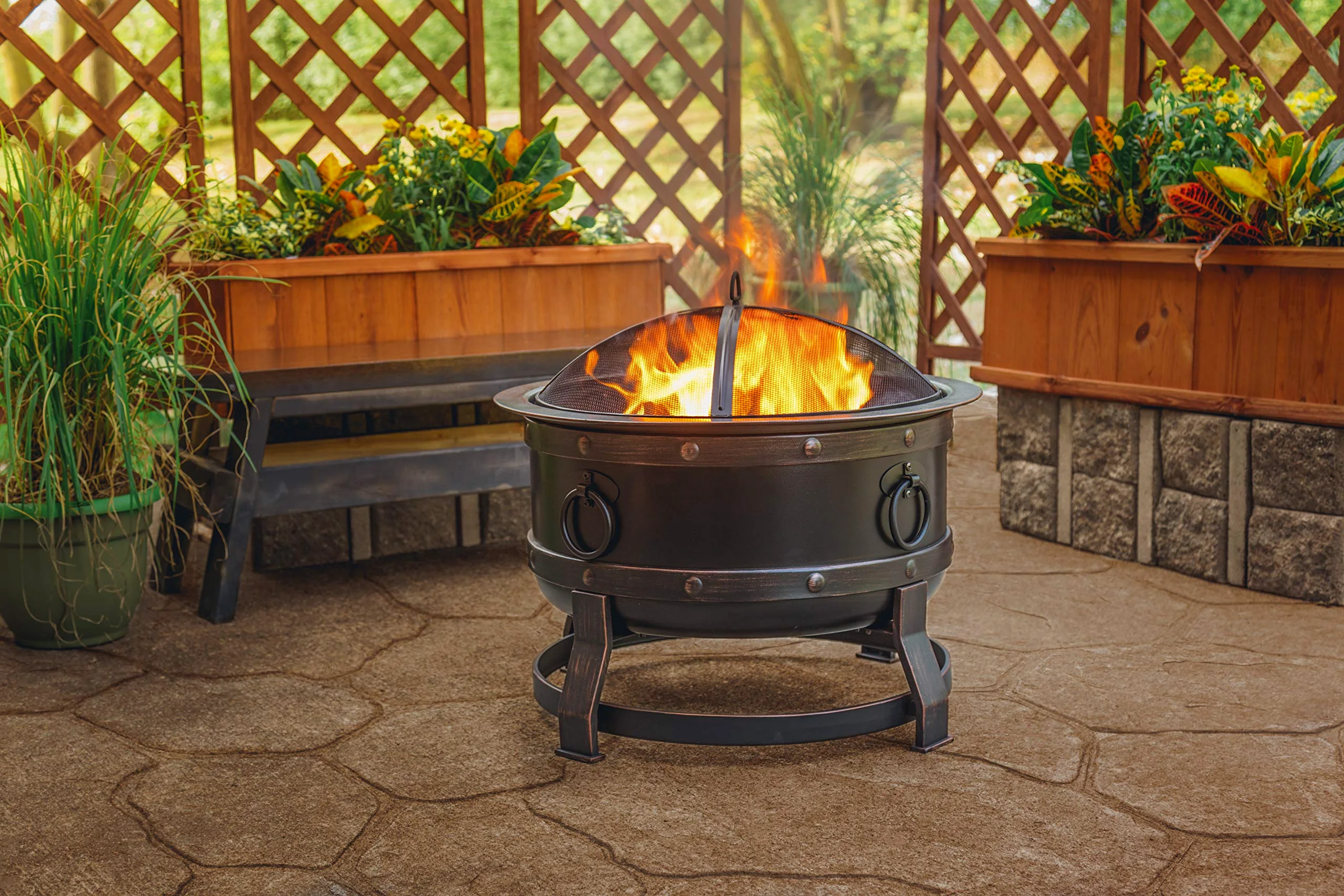
NFPA asks for a fire pit screen. Five of our wood-burning pits come with a mesh spark cover: the Langston, Palmetto, Killian, Hudson and Charlotte. On the Palmetto and Killian, the poker that tends the fire also lifts the spark guard.
A screen does its work only while it sits on the bowl. Lift it to add wood, then set it straight back.
The two steel fire rings have no screen of their own. If you choose a ring, plan for a fire pit screen that covers it before the first evening outside.
NFPA also sets a three-foot line around the pit for children and pets. Set the chairs so that line runs in front of them, and the rule becomes easy to teach: children and the dog stay behind the seats.
Cooking changes the layout a little. The same five bowls, from the Langston to the Charlotte, each carry a cooking grid. If you plan to grill over the fire, leave room outside the three-foot line for a side table and the plates, so nobody carries a tray across the circle.
What goes on the fire
For a wood-burning pit, NFPA calls for clean, dry, seasoned hardwood. EPA's Burn Wise pages for backyard fires put a number on dry, about 20 percent moisture on a meter. The same pages rule out green wood, construction waste, plastic, garbage and yard waste.
Store the wood the way EPA's wood-burning pages describe: outdoors, off the ground, with only the top covered, seasoning for at least six months. Keep that stack outside the 10-foot circle as well: NFPA's distance applies to firewood like anything else that can burn.
Gasoline and other flammable liquids never go on the fire, NFPA says, and that holds on the evening the kindling will not catch. Our Langston, Killian and Hudson bowls use a Circulair system that raises the wood for more air flow. In the Palmetto and Charlotte a wood grate does the same, so the fire draws its air from underneath.
Some evenings are wrong for a fire whatever the pit. NFPA says to skip burning on windy, dry days, and EPA's backyard pages add air quality alert days to the list.
Propane tables follow the same map
Lower pollutants do not change where a propane table belongs. Treat the Halifax, Montreal and Lockwood the way NFPA treats any fire pit: outdoors, on a level base that will not burn, away from siding, decks, eaves and overhanging branches. Read the manual of the table for its own clearances as well.
A covered porch or a spot under the eaves is off the list for either fuel. NFPA puts fire pits outdoors only and away from eaves, and a roof over the flame is what that advice rules out.
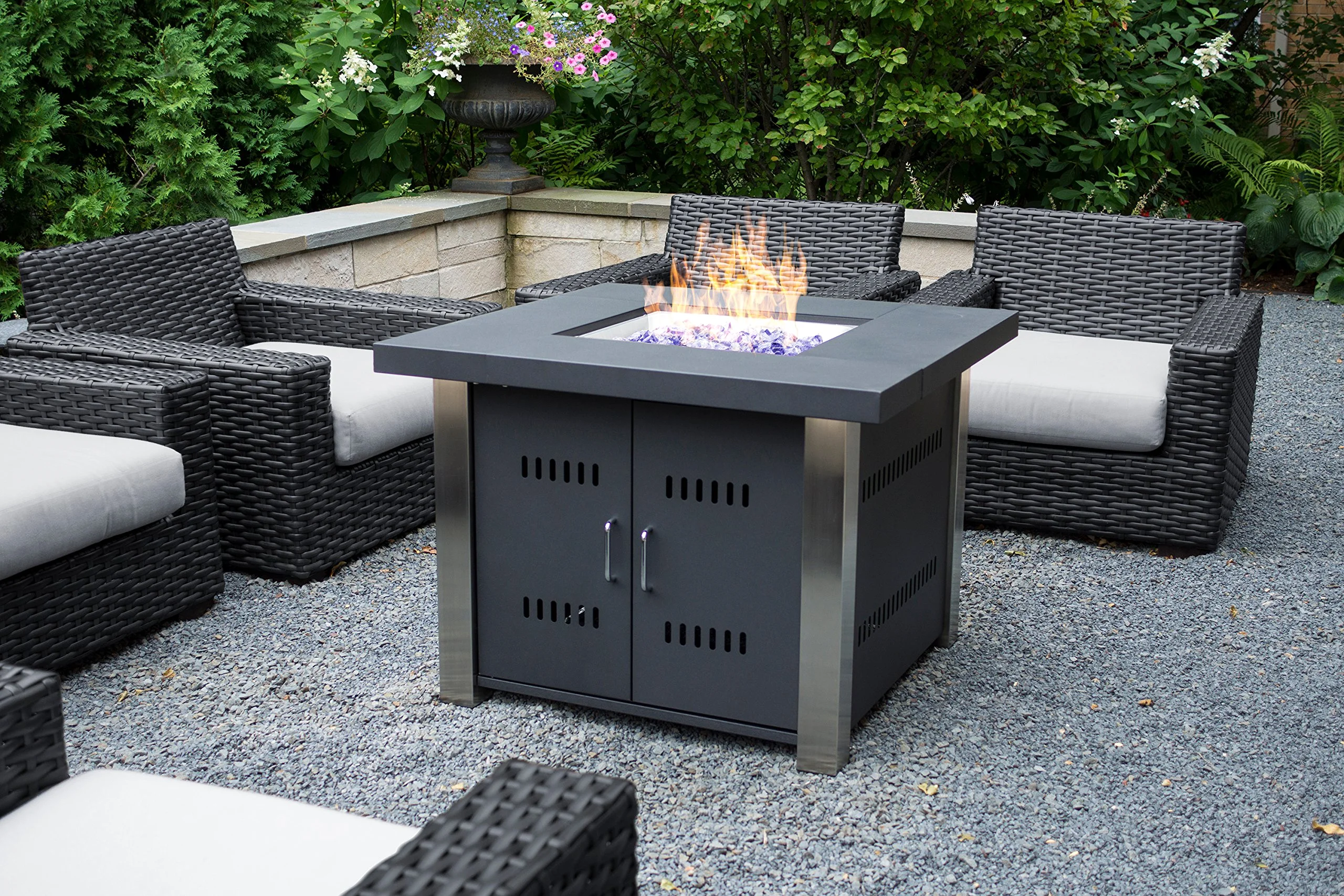
Each table carries its fuel inside. The 20 lb tank sits in the base behind a hinged door, so the tank and the flame share one level pad and one clear circle. Output differs: the Halifax runs at up to 40,000 BTU, the Montreal at 40,000 and the Lockwood at 30,000, each with a variable flame. Blue glass rocks sit over the burner on all three.
The Lockwood adds a black glass top and floor levelers. Montreal pairs a matte black steel table with stainless steel legs and a stainless steel lid. The Halifax stands 27 inches tall on a 30 by 30 inch footprint, with matte black steel and stainless steel accents.
At the end of the evening a propane table goes out at its knob. A wood fire takes longer, and the ashes still need their metal can.
Our fire pits side by side
Set the footprint against the space you measured. The Charlotte and Hudson both run 34 inches across, the Langston and Palmetto bowls 30, and the Montreal table 38. Each of them still needs its 10 feet of clear ground past the rim.
The wood bowls and rings sit together among our fire pits and fire rings, and the propane tables among our gas fire pit tables. You will find the whole lineup on our fire pits shelf.
| Fire pit | Fuel | Shape and size | Spark screen | Also in the box |
|---|---|---|---|---|
| 28-inch round steel fire ring | Wood | Round, 28 in. inner ring | No | Works alone or inside a brick surround |
| 36-inch square steel fire ring | Wood | Square, 36 in., 10 in. deep | No | Works alone or inside a brick surround |
| Langston deep bowl | Wood | Round, 30 in. bowl, 12 in. deep | Mesh cover | Cooking grid |
| Palmetto | Wood | Round, 30 in. bowl | Mesh cover | Cooking grid, wood grate, poker |
| Killian | Wood | Round, 28 in. bowl | Mesh cover | Cooking grid, poker |
| Hudson square 34-inch | Wood | Square, 34 in., 30 in. bowl | Mesh cover | Cooking grid, poker, weather cover, floor levelers |
| Charlotte slate | Wood | Round, 34 in. slate top | Mesh cover | Table lid, wood grate, cooking grid, poker |
| Halifax gas table | Propane, 20 lb tank not included | 30 x 30 in., 27 in. tall | No | Table lid, blue glass rocks, up to 40,000 BTU |
| Montreal square gas table | Propane, 20 lb tank not included | Square, 38 in. | No | Table lid, blue glass rocks, 40,000 BTU |
| Lockwood gas table | Propane, 20 lb tank not included | Square, 28 x 28 in. | No | Blue glass rocks, floor levelers, 30,000 BTU |
When the fire is out
Ashes are the last step. NFPA says to put cooled ashes in a metal container with a tight-fitting lid, and USFA places a lidded ash can outside, at least 10 feet from the home. The Palmetto adds an ash catcher to keep ashes from escaping while the fire burns.
Between fires, the Hudson ships with a weather resistant cover, and the Langston, Palmetto, Charlotte and Montreal each take a fitted Pleasant Hearth cover, sold separately. Drain holes in the Palmetto and Killian let rain run out of the bowl instead of standing in it.
USFA's rule for the fireplace indoors, to put the fire out before you go to sleep or leave home, fits a backyard pit just as well. A bowl left burning after the last guest heads inside is a fire nobody is watching.
Every pit in the the Pleasant Hearth catalog range needs the same patch of yard, and the routine repeats each time you light one:
- Day and rules. Look up local rules, and skip windy, dry days and air quality alert days.
- Clear circle. Ten feet clear of siding, decks, eaves, branches, fences and the woodpile, measured from the outer edge.
- Ground. Patio blocks, brick or concrete, level under the pit or the table.
- Seating line. Chairs behind the three-foot mark, children and pets behind the chairs.
- Fuel. Dry, seasoned hardwood under a screen, or propane from the tank in the base, and never gasoline.
- Ashes. Cooled ashes go into a lidded metal can, placed at least 10 feet from the house.
From the catalog
Pieces from this guide
Pleasant Hearth 28-inch round steel fire ring
Round · wood-burning

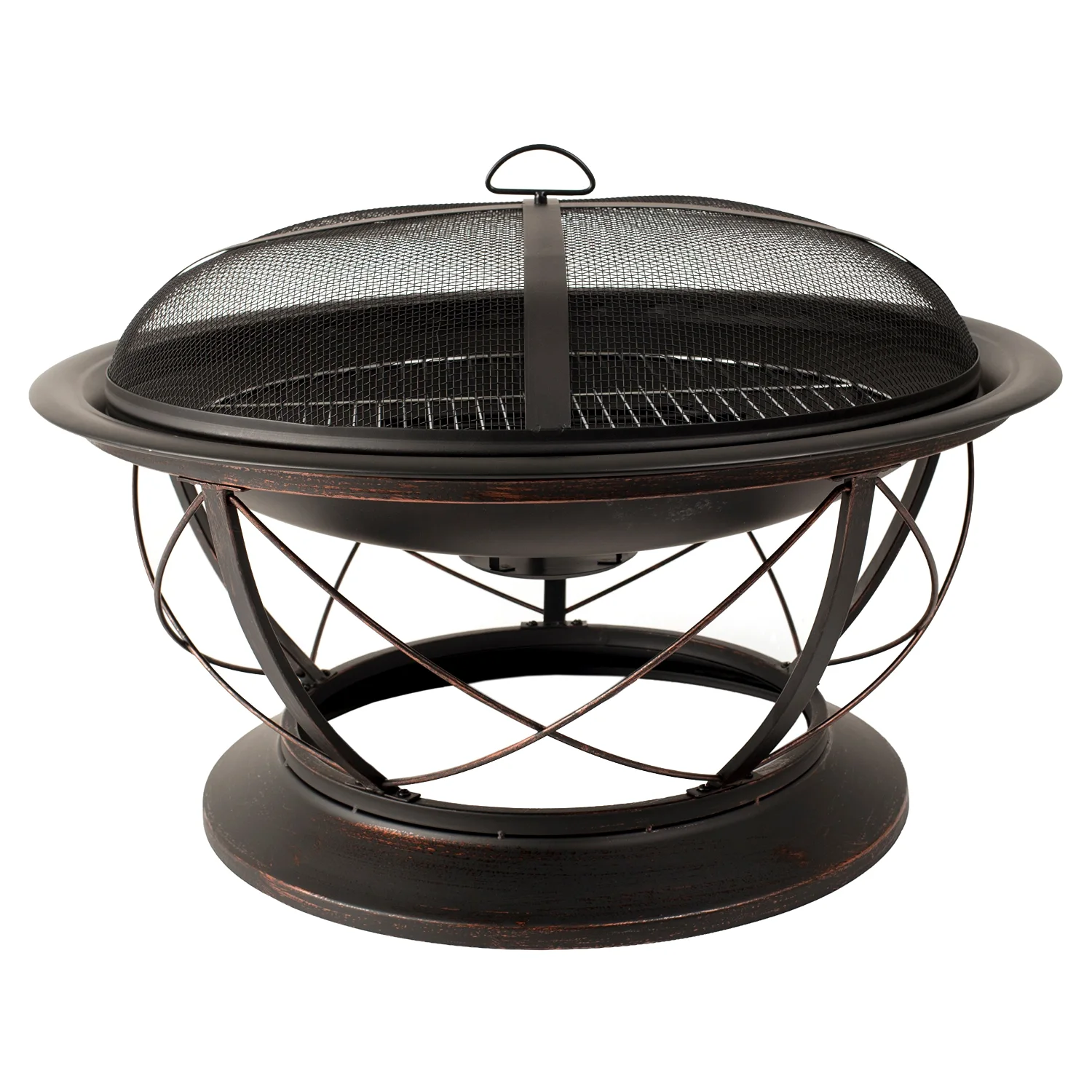

Pleasant Hearth Palmetto fire pit with cooking grid
wood-burning · spark screen
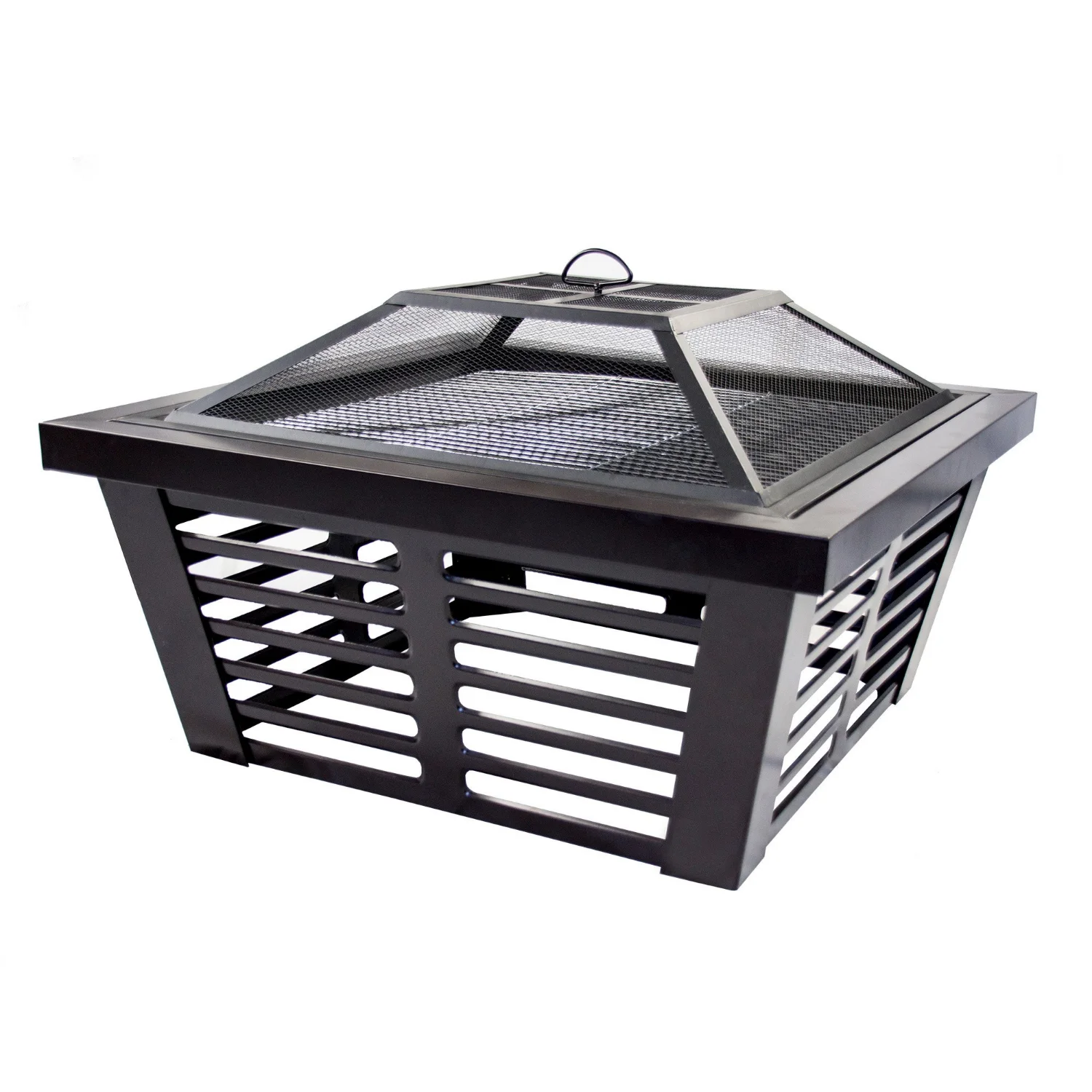

Pleasant Hearth Hudson square 34-inch fire pit
Square · wood-burning · spark screen
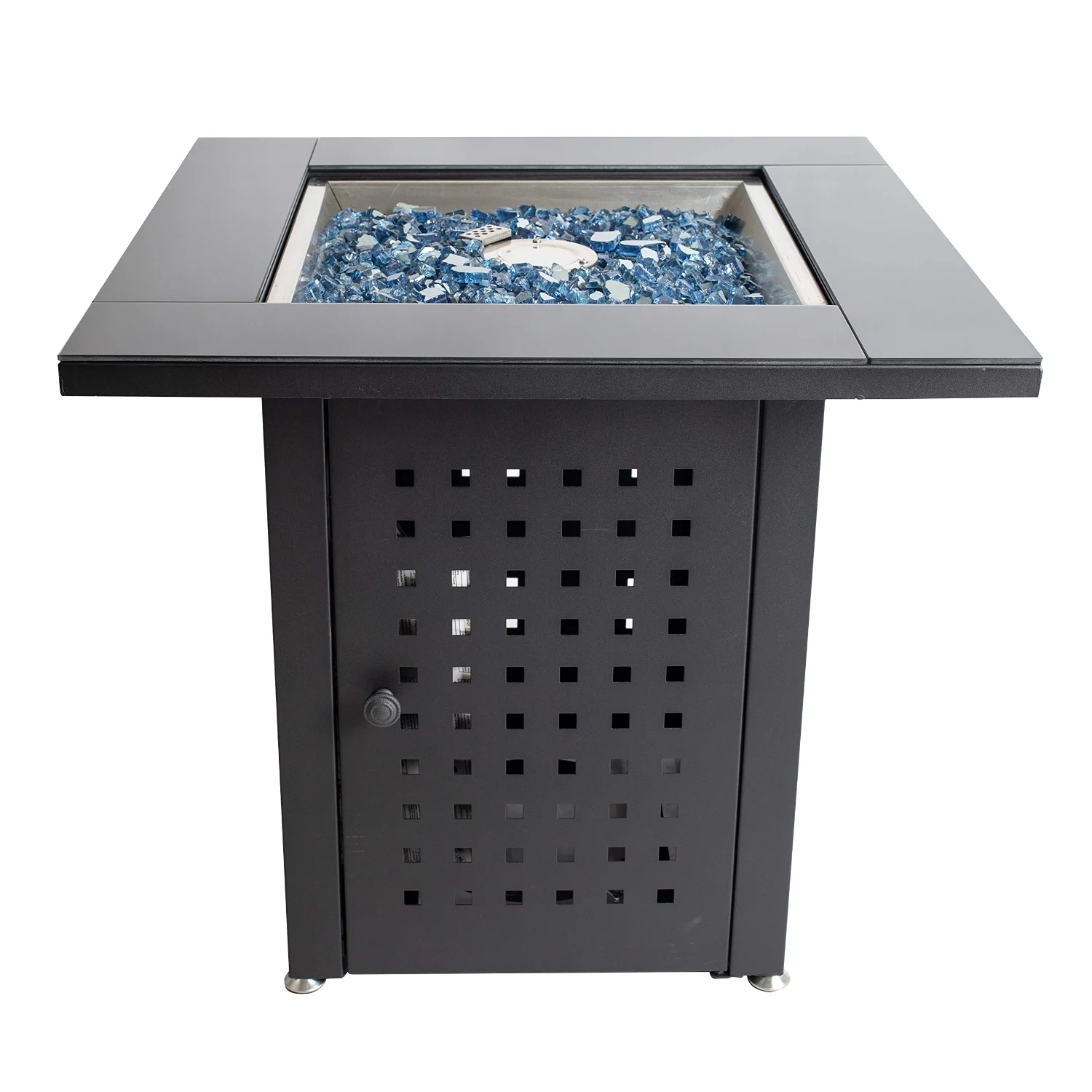

Pleasant Hearth Lockwood gas fire pit table
propane
